Sunday, March 26, 2023

Ability Based Systems

 Ability Based Systems

Lucas McElroy


The basic definition of ableism is the discrimination in favor of able-bodied people. The Albeist assumption is that people with a disability need to be fixed, and that the disability defines the person who has it. America is a country built upon being normal. When someone with a disability walks into a cafe, it can be hard not to stare. Most people wonder how this has happened to the person, and feel bad for them but at the end of the day this is only causing the person with the disability to feel worse about themselves. The treatment of disabled people in America's school systems is one of the worst displays of how disabled people are treated in our country. One of the most convincing arguments was about deaf students. It makes the most sense that these students would be taught ASL, as it is made for the deaf and hard of hearing to be able to communicate with others. This sadly is not the case. Deaf children in todays school systems are told to lip read what others are saying and speak to them. This can be demoralizing for these students, as they can not even hear what they say so they are more self conscious. It has been proven in studies that deaf children receive a lower level of education simply due to the fact that their version of language is not used for them. There is a lot of room for growth in the education of students with disabilities. The first step is realizing that trying to make them learn the same as students without disabilities simply is not going to work. With a little hard work, and educators who are specialized in different disability teaching, disabled students would be achieving the same level of education as everyone else, which is something they deserve.   



https://study.com/learn/lesson/ableism-public-schools-forms-examples.html


Tuesday, March 21, 2023

Bilingual Teaching in Schools

 Bilingual Education in Schools 


    Reflection - In looking at the two sources of bilingual education I realized that there are two sides to the story. On one hand you could try and help students who do not speak English thrive in school and feel more like their peers. On the other hand there are students who are not able to take on their true culture and represent that while they are at school simply because they are in a new country where they are forced to learn a new language. I see both sides. I believe it is important the students who do not speak English learn to in the school setting, as English is a top language in the world, however they should not have to give up their native language and culture to learn this. Often times students will forget some of the heritage because they are so focused on learning this new language in school to get the good grade and to fit into their school and with their peers better. In the videos the teachers incorporated their students native language into their English teachings, so the students are not totally giving up their culture. This also helps these students have a starting place. Starting with their native language makes them feel more comfortable and slowly incorporating more and more English is the best way for them to learn. For these students the educators must also keep in mind that this a complete culture shock and that it is also their job as an educator to keep their students feeling safe in their classroom. 


Hyperlink - https://www.renaissance.com/edword/bilingual-education/#:~:text=Bilingual%20education%20is%20a%20term,outcome%20goal%20of%20the%20model.


Sunday, March 12, 2023

Literacy With an Attitude Patrick Finn

 Literacy With an Attitude

By: Patrick Finn


    Throughout the passage Finn writes about how Jean Anyon studied fifth grade classes throughout New Jersey. The classes ranged from executive elites to working class. In the working class classrooms the teachers were younger and just handed out work without explaining why the students needed to do it.  The students were given the work and expected to do it the teachers way and if they did not they would receive a bad grade. Teachers also talk lowly of their students. Which does not inspire them in the classroom. The middle-class school was more based on the understanding of the books and the definitions in the books. The classroom was focused on getting the right answer and that was how you were graded. In the affluent professional schools the teachers cared more about the students creativity and personal development more. Teachers would rarely give direct orders and students focused on being imaginative. In the executive elite schools their knowledge was academic, intellectual, and rigorous. These students were taught how to go about life and succeed and how to achieve an "elite" lifestyle. The second chapter of this passage is aimed to show you how growing up in different communities can pave your future.


Comments: How can a state or country find teachers for different working classes to teach all students equally?


Blog #10

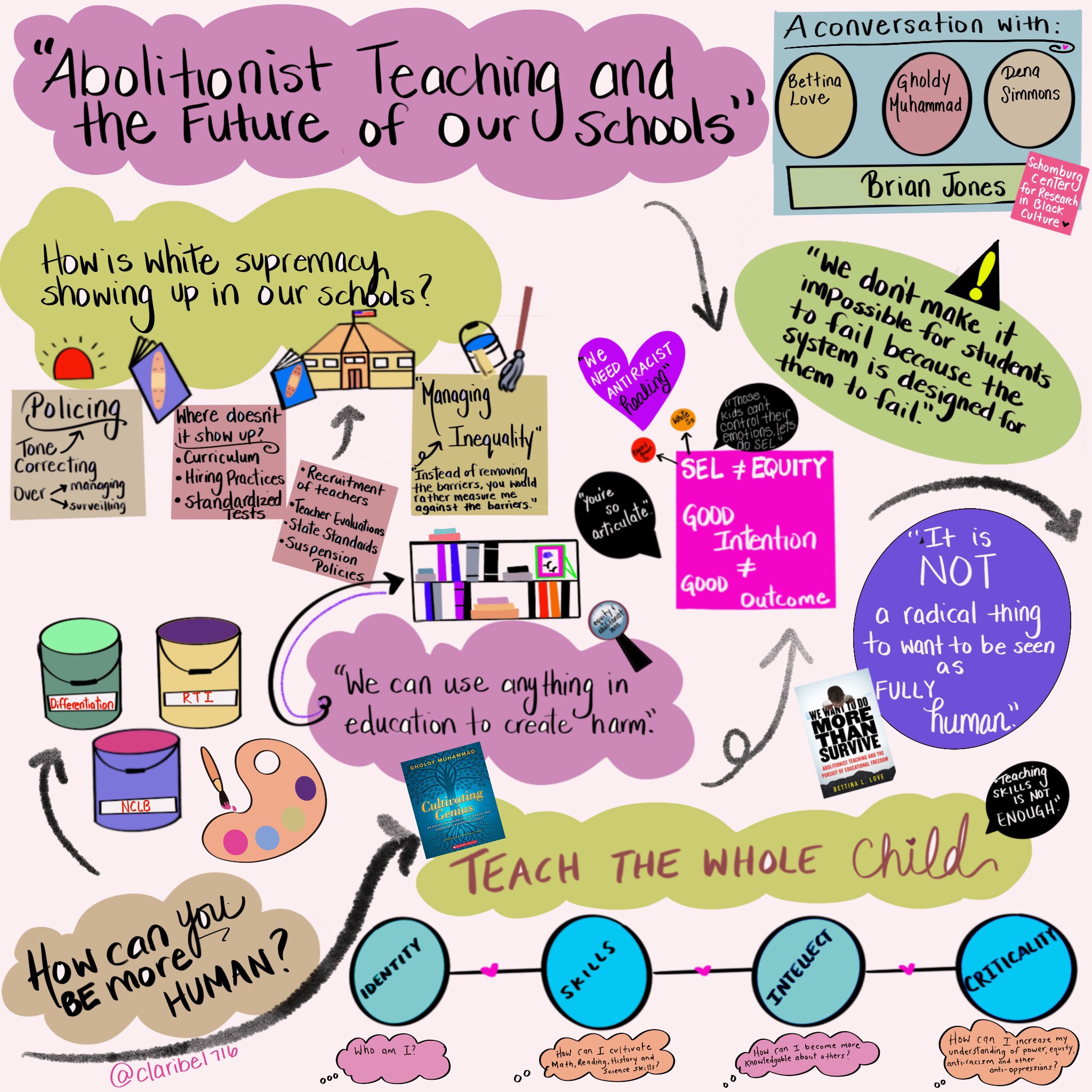
 Abolitionist Teaching Lucas McElroy             In the video with Dr. Love, we learn about the "Abolitionist Learning" method of ...